

Medical and Health • Imperial Clinic
Reviewed by Imperial Clinic Practitioners • Registered Chinese Medicine Practitioners in Sydney
Stress and anxiety can affect sleep, mood, digestion, concentration, breathing, muscle tension and overall wellbeing. Some people feel constantly tense or overwhelmed, while others may experience restlessness, racing thoughts, fatigue or difficulty switching off.
Acupuncture for stress and anxiety takes a whole-person approach. At Imperial Clinic, treatment is personalised according to your symptoms, stress pattern, sleep, digestion, lifestyle, constitution and Traditional Chinese Medicine assessment.
Stress & Anxiety Support
Acupuncture for Stress and Anxiety
In Traditional Chinese Medicine, stress and anxiety may be associated with disrupted Qi movement, Liver Qi stagnation, Heart and Shen imbalance, Spleen weakness, Blood deficiency or Yin imbalance. Acupuncture aims to support the body’s natural ability to relax, regulate and restore balance.
- May support relaxation and emotional balance
- May help ease stress-related muscle tension
- Supports nervous system regulation and calmness
- May assist sleep quality and restfulness
- Considers digestion, energy and lifestyle patterns
- Can be combined with herbs or lifestyle guidance when suitable
Common Stress and Anxiety Symptoms
Stress and anxiety can appear differently from person to person. Some people notice physical tension, while others experience emotional sensitivity, poor sleep, digestive changes or difficulty concentrating.
Patterns We Commonly Support
- Racing thoughts or difficulty switching off
- Stress-related neck, shoulder or jaw tension
- Poor sleep or waking during the night
- Digestive changes linked with stress
- Fatigue, low energy or emotional exhaustion
- Restlessness, irritability or overwhelm
Why Stress and Anxiety Affect the Body
Stress does not only affect the mind. It can influence the nervous system, sleep rhythm, digestion, breathing, posture, muscle tension and energy. Over time, the body may find it harder to relax and recover.
Nervous System
Stress may keep the body in a heightened state, making it harder to feel calm, rested or grounded.
Muscle Tension
Neck, shoulder, jaw, back or chest tension may appear when stress is held in the body.
Sleep and Digestion
Stress and anxiety may affect sleep quality, appetite, bloating, reflux or bowel habits.
Stress and Anxiety from a TCM Perspective
Traditional Chinese Medicine views emotional wellbeing through the relationship between Qi, Blood, Yin, Yang and the organ systems. Your practitioner may consider stress triggers, sleep, digestion, energy, temperature, pain, menstrual cycle and lifestyle before choosing acupuncture points.
Liver Qi Flow
In TCM, smooth Qi flow is considered important for emotional balance, tension relief and stress regulation.
Heart and Shen
The Heart and Shen may be considered when symptoms include restlessness, poor sleep or emotional unease.
Spleen and Digestion
Overthinking, fatigue and digestive weakness may be considered through Spleen-related patterns in TCM.
How Acupuncture May Support Stress and Anxiety
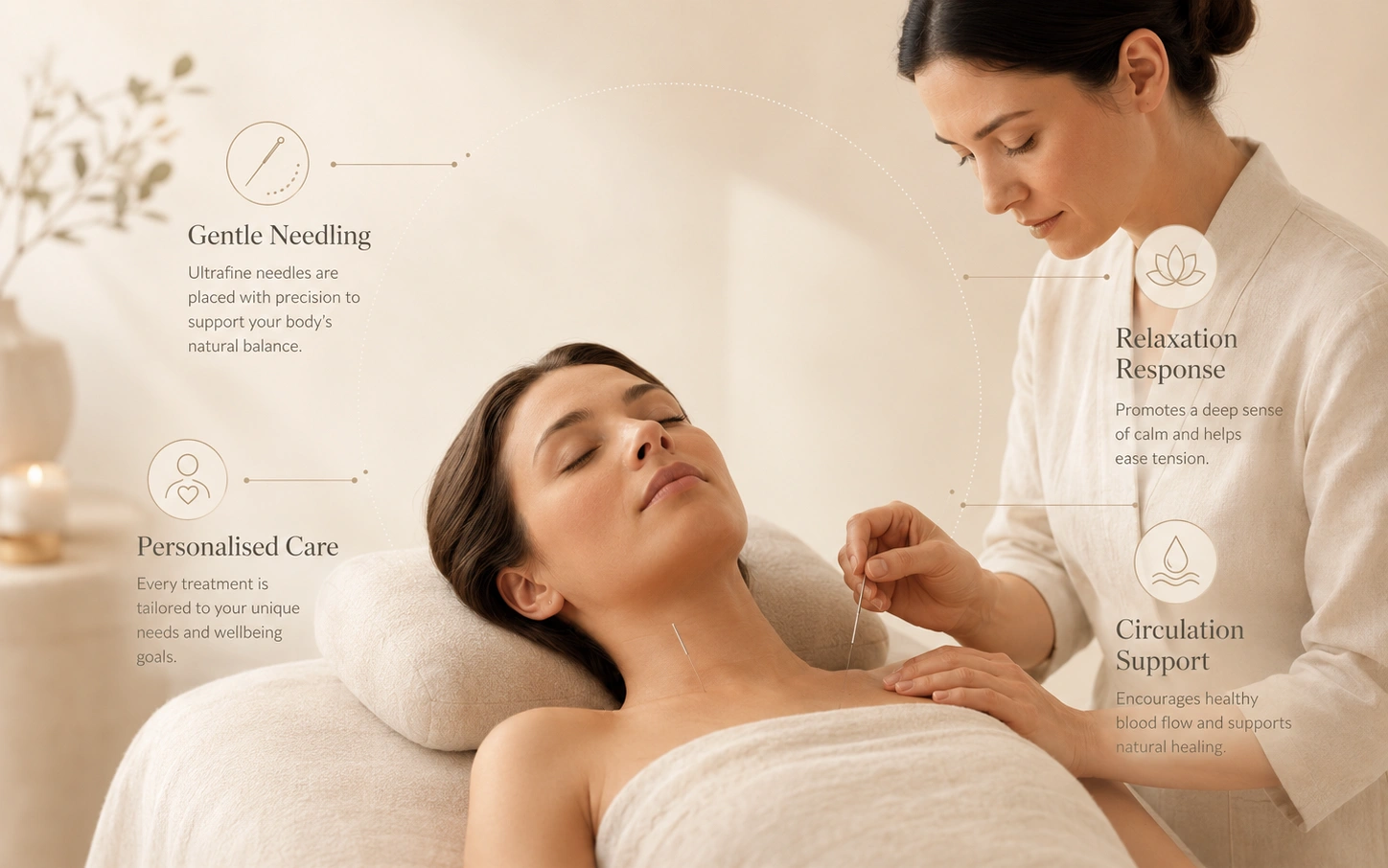
Acupuncture uses fine, sterile needles to stimulate selected points on the body. Treatment may support relaxation, reduce physical tension, calm the nervous system and encourage the body to move out of a heightened stress state.
Relaxation Support
Acupuncture may help the body settle into a calmer, more relaxed state during and after treatment.
Tension Relief
Treatment may support tight muscles, jaw tension, neck tension and stress-related physical discomfort.
Sleep and Recovery
Care may support sleep quality, restfulness and recovery when stress affects the body’s rhythm.
Different Stress Patterns Need Different Care
Stress and anxiety are not the same for everyone. One person may feel tense and irritable, another may feel exhausted and depleted, while another may experience poor sleep and digestive changes. A personalised assessment helps guide treatment.
Tension Pattern
May involve tight muscles, irritability, headaches, chest tightness or difficulty relaxing.
Restless Pattern
May involve racing thoughts, poor sleep, restlessness, overthinking or feeling unsettled.
Depleted Pattern
May involve fatigue, low motivation, emotional exhaustion, poor concentration or weak digestion.
Can Acupuncture Be Combined with Herbal Medicine?
Yes. In some cases, Chinese herbal medicine may be recommended alongside acupuncture when appropriate. Herbal formulas may be tailored to stress, fatigue, poor sleep, digestion or emotional wellbeing patterns.
- Acupuncture may support relaxation and nervous system balance
- Chinese herbs may support sleep, stress and fatigue patterns when suitable
- Lifestyle guidance may focus on sleep rhythm, stress and recovery
- Treatment can be adjusted according to your response
- Medication, supplements and health history are reviewed for safety
Lifestyle Support for Stress and Anxiety
Acupuncture works best when it is supported by daily habits that help the body recover. Your practitioner may suggest simple lifestyle changes depending on your individual situation.
Sleep Routine
A consistent evening routine may help the body settle more easily at night.
Gentle Movement
Walking, stretching or gentle breathing may support circulation and stress release.
Digestive Care
Regular meals and digestive support may help stabilise energy and mood throughout the day.
What to Expect During Treatment
Health Discussion
We discuss your stress pattern, anxiety symptoms, sleep, digestion, energy and health history.
TCM Assessment
Your practitioner assesses your Traditional Chinese Medicine body pattern and constitution.
Gentle Acupuncture
Fine sterile needles are gently inserted at selected points while you rest comfortably.
Aftercare Support
You may receive personalised guidance for rest, breathing, sleep, stress or lifestyle habits.
Acupuncture for Stress and Anxiety in Sydney
Imperial Clinic provides personalised acupuncture and Traditional Chinese Medicine care for stress, anxiety, sleep and wellbeing support in Sydney. Treatment plans are tailored according to your symptoms, constitution, health history and wellbeing goals.
When Should You Seek Professional Advice?
Stress and anxiety can have many causes. It is important to seek professional advice if symptoms are persistent, worsening, affecting daily life or associated with emotional distress.
- Anxiety or stress affects work, sleep, relationships or daily function
- You experience panic symptoms, severe distress or persistent low mood
- You feel unable to cope or symptoms are worsening
- You have chest pain, breathing difficulty or concerning physical symptoms
- You are taking medication or managing a mental health condition
- You are unsure whether acupuncture is suitable for you
Frequently Asked Questions
Can acupuncture help stress?
Acupuncture may support stress by encouraging relaxation, reducing tension and supporting nervous system balance.
Can acupuncture help anxiety?
Acupuncture may be used as part of personalised support for anxiety-related patterns and emotional wellbeing.
How many sessions will I need?
This depends on your symptoms, stress pattern, health history and individual response to treatment.
Will acupuncture make me sleepy?
Some people feel relaxed or sleepy after treatment, while others feel calmer and more settled.
Can herbs be combined with acupuncture?
Yes. Chinese herbal medicine may be considered when suitable and should be prescribed by a qualified practitioner.
Should I continue medical or psychological care?
Yes. Acupuncture can be supportive care and should not replace medical or psychological treatment when needed.
Related Health Articles
Looking for Stress and Anxiety Support?
Book a consultation with our experienced practitioners and discover whether acupuncture and Traditional Chinese Medicine care may be suitable for your stress or anxiety concerns.
View Acupuncture Services