

Medical and Health • Imperial Clinic
Reviewed by Imperial Clinic Practitioners • Registered Chinese Medicine Practitioners in Sydney
Muscle tension is a common concern that may affect the neck, shoulders, upper back, lower back, hips or legs. It can feel like tightness, stiffness, aching, restricted movement or persistent discomfort. Acupuncture may help support muscle tension relief by encouraging circulation, relaxing tight muscles and promoting overall body balance.
Many patients seek acupuncture for stress-related muscle tightness, postural discomfort, recurring stiffness and pain caused by overuse or prolonged sitting. At Imperial Clinic, treatment plans are tailored according to each person’s symptoms, lifestyle, body condition and recovery goals.
Muscle Tension Support
How Acupuncture May Help Muscle Tension
In Traditional Chinese Medicine, muscle tension may be associated with disrupted Qi and Blood flow, stress, overuse, poor posture or long-term imbalance. Acupuncture aims to stimulate selected points to support circulation, ease tight muscles and encourage the body’s natural relaxation response.
- May help release tight and overworked muscles
- Supports circulation to affected areas
- Encourages relaxation of the nervous system
- May reduce stiffness and restricted movement
- Helps support posture-related discomfort
- Supports overall recovery and wellbeing
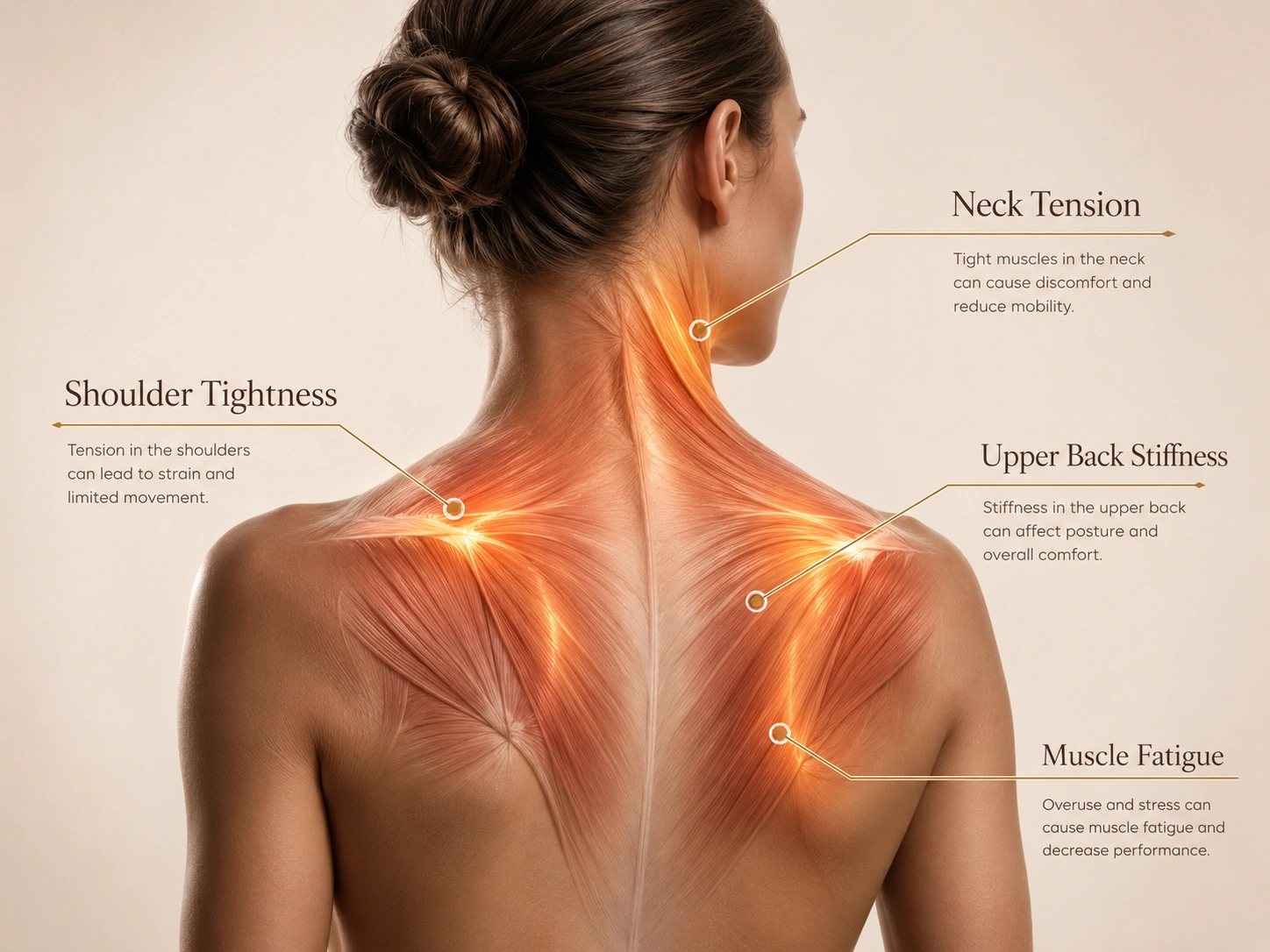
Common Areas of Muscle Tension
Muscle tension can appear in different parts of the body depending on posture, stress, activity level and daily habits. Understanding where tension builds up can help guide a more personalised treatment approach.
Areas We Commonly Support
- Neck and shoulders
- Upper back and shoulder blades
- Lower back and hips
- Jaw and facial tension
- Legs and calves
- Stress-related body tightness
What Causes Muscle Tension?
Muscle tension can develop gradually or appear after physical strain, emotional stress or poor recovery. In many cases, it is influenced by a combination of lifestyle, posture and body condition.
Posture & Desk Work
Long hours sitting, computer use and poor posture may contribute to neck, shoulder and back tightness.
Stress & Fatigue
Emotional stress and poor sleep may increase muscle guarding, jaw tension and nervous system sensitivity.
Overuse & Strain
Exercise, repetitive movement, lifting or physical work may lead to tightness and recurring muscle discomfort.
Muscle Tension from a TCM Perspective
Traditional Chinese Medicine views muscle tension as more than a local muscle problem. It may reflect blocked circulation, stress, fatigue, weakness or imbalance in the body. Treatment aims to support smoother flow, ease tightness and restore a greater sense of comfort and movement.
- Acupuncture may help release tight muscles and support circulation
- Cupping may be used to ease muscular tension when appropriate
- Moxibustion may be considered for cold-type stiffness or weakness
- Chinese herbal medicine may support overall body balance when suitable
- Lifestyle advice may include posture, stretching and stress management support
What to Expect During Treatment
Consultation
We discuss your tension areas, posture, stress level, sleep, lifestyle and TCM body pattern.
Assessment
Your practitioner assesses muscle tightness, pain pattern, mobility and related symptoms.
Treatment
Fine sterile needles are gently inserted at selected points while you rest comfortably.
Aftercare
We may suggest stretching, posture support, breathing, heat therapy or lifestyle advice when appropriate.
Acupuncture for Muscle Tension in Sydney
Imperial Clinic provides personalised acupuncture treatments for muscle tension, stiffness, postural discomfort and stress-related tightness across Sydney. Our practitioners assess each individual case and develop tailored treatment plans based on Traditional Chinese Medicine principles and modern clinical practice.
When Should You Seek Professional Advice?
Muscle tension can have many causes. It is important to seek professional advice if symptoms are persistent, worsening or affecting your daily movement, sleep or work.
- Muscle tightness lasting more than a few days
- Recurring neck, shoulder or back stiffness
- Pain affecting sleep, posture or work
- Restricted movement or reduced flexibility
- Numbness, tingling or weakness
- Tension associated with stress or headaches
Frequently Asked Questions
Can acupuncture help muscle tension?
Acupuncture may support muscle tension relief by encouraging circulation, relaxation and reduced tightness.
Why do my muscles feel tight?
Muscle tightness may be related to stress, posture, overuse, poor sleep, injury or reduced movement.
Can stress cause muscle tension?
Yes. Stress may contribute to neck, shoulder, jaw and back tension in some people.
How many sessions will I need?
Treatment frequency depends on the location, severity, duration and cause of your muscle tension.
Can acupuncture be combined with cupping?
Your practitioner may recommend acupuncture together with cupping, moxibustion or other therapies when appropriate.
Will treatment be painful?
Most patients experience only mild sensations and often find acupuncture treatment relaxing.
Related Health Articles
Looking for Muscle Tension Support?
Book a consultation with our experienced practitioners and discover whether acupuncture may be suitable for your condition.
View Pain Management Services