

Medical and Health • Imperial Clinic
Reviewed by Imperial Clinic Practitioners • Registered Chinese Medicine Practitioners in Sydney
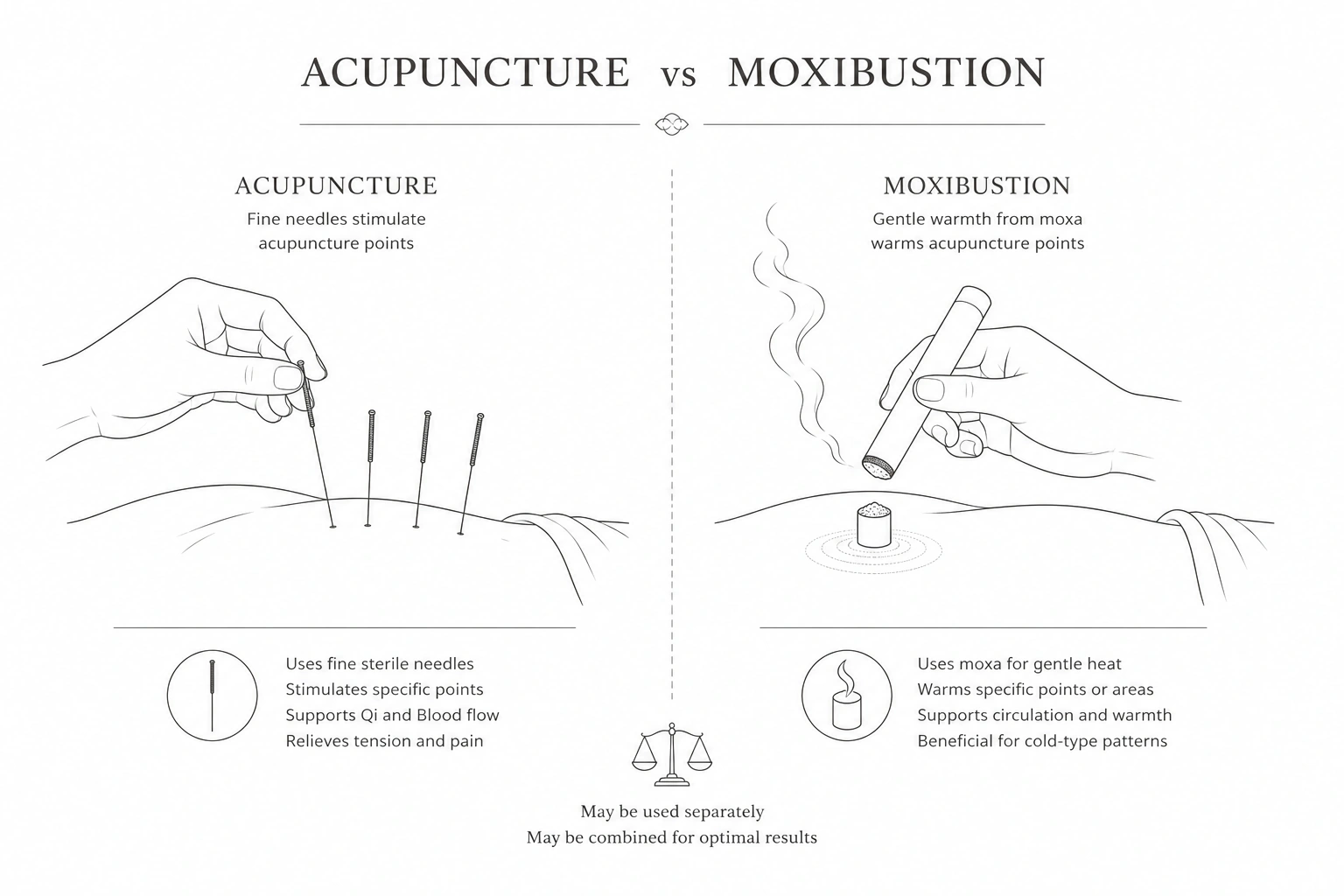
Acupuncture and moxibustion are both important therapies in Traditional Chinese Medicine. While acupuncture uses fine sterile needles to stimulate selected points, moxibustion uses gentle warmth from moxa to support circulation, comfort and balance.
Although they are often used together, acupuncture and moxibustion are not the same. Understanding the difference can help patients feel more confident about their treatment options and what may be recommended during a consultation.
Acupuncture vs Moxibustion
What Is the Difference Between Acupuncture and Moxibustion?
The main difference is how the body is stimulated. Acupuncture uses fine needles placed at specific points, while moxibustion uses warmth from burning moxa near selected points or areas. Both therapies aim to support the smooth flow of Qi and Blood, but they work in different ways.
- Acupuncture uses fine sterile needles
- Moxibustion uses gentle heat from moxa
- Acupuncture may help release tension and support circulation
- Moxibustion may help warm cold-type patterns
- Both may support comfort, balance and wellbeing
- Your practitioner may recommend one or both depending on your condition
What Is Acupuncture?
Acupuncture involves the gentle insertion of fine sterile needles into selected points on the body. In Traditional Chinese Medicine, acupuncture is used to support the movement of Qi and Blood, encourage circulation, relax tension and restore balance.
Acupuncture May Support
- Pain management
- Muscle tension relief
- Stress and nervous system balance
- Circulation and recovery
- Headache and migraine support
- Overall wellbeing
Moxibustion May Support
- Cold-type discomfort
- Circulation and warmth
- Digestive support
- Women’s health patterns
- Vitality and body warmth
- Comfort and balance
What Is Moxibustion?
Moxibustion is a warming therapy that uses moxa, commonly made from dried mugwort, to gently warm selected acupuncture points or areas of the body. It is often used when warmth is suitable for a patient’s condition and Traditional Chinese Medicine pattern.
Acupuncture vs Moxibustion: Key Differences
Both therapies are personalised, and the best choice depends on your symptoms, health history and body condition. Your practitioner will assess whether acupuncture, moxibustion or a combined approach is most suitable.
Acupuncture
- Uses fine sterile needles
- Stimulates selected acupuncture points
- May support pain relief and muscle relaxation
- Often used for pain, tension, stress and internal balance
- Usually involves little to no discomfort
Moxibustion
- Uses gentle warmth from moxa
- Warms selected points or body areas
- May support circulation and cold-type discomfort
- Often used when warmth is appropriate
- Should feel warm and comfortable, not painful
Which Treatment Is Right for You?
There is no single answer for every patient. Some people may benefit from acupuncture alone, while others may be better suited to moxibustion or a combined treatment approach. The decision depends on your symptoms, constitution and Traditional Chinese Medicine diagnosis.
For Pain & Tension
Acupuncture may be recommended for muscle tension, pain management, headaches, stress-related tightness and mobility concerns.
For Cold-Type Patterns
Moxibustion may be considered when symptoms feel worse with cold, improve with warmth or show cold-type patterns in TCM.
For Combined Care
Some treatment plans may combine acupuncture and moxibustion when both point stimulation and gentle warmth are suitable.
What to Expect During Treatment
Consultation
We discuss your symptoms, health history, lifestyle and Traditional Chinese Medicine body pattern.
Treatment Choice
Your practitioner recommends acupuncture, moxibustion or a combined approach when suitable.
Treatment
Selected points or areas are treated carefully while your comfort is monitored throughout the session.
Aftercare
We may suggest warmth, rest, stretching, lifestyle support or follow-up treatment when appropriate.
Acupuncture and Moxibustion in Sydney
Imperial Clinic provides personalised acupuncture and moxibustion treatments in Sydney as part of Traditional Chinese Medicine care. Our practitioners assess each individual case and recommend suitable treatment options based on your symptoms, constitution and wellbeing goals.
When Should You Seek Professional Advice?
Acupuncture and moxibustion should be tailored to each person. It is important to consult a qualified practitioner before starting treatment, especially if you have complex health concerns or are unsure which therapy is suitable.
- You are unsure whether acupuncture or moxibustion is suitable
- You have persistent, worsening or unexplained symptoms
- You are pregnant or planning pregnancy
- You have sensitive skin or heat sensitivity
- You are taking medication or receiving other treatment
- You have a medical condition requiring ongoing care
Frequently Asked Questions
Is moxibustion the same as acupuncture?
No. Acupuncture uses fine needles, while moxibustion uses gentle warmth from moxa.
Can acupuncture and moxibustion be used together?
Yes. They may be combined when both point stimulation and warmth are suitable for your condition.
Which one is better?
Neither is universally better. The best choice depends on your symptoms, constitution and TCM diagnosis.
Does moxibustion hurt?
Moxibustion should feel warm and comfortable, not painful. Your practitioner will monitor your comfort.
Does acupuncture hurt?
Most patients feel little discomfort. Sensations may include mild aching, tingling, heaviness or warmth.
How do I know which treatment I need?
Your practitioner will assess your symptoms and body pattern before recommending a suitable approach.
Related Health Articles
Interested in Traditional Chinese Medicine Care?
Book a consultation with our experienced practitioners and discover whether acupuncture, moxibustion or a combined approach may be suitable for your condition.