

Medical and Health • Imperial Clinic
Reviewed by Imperial Clinic Practitioners • Registered Chinese Medicine Practitioners in Sydney
Sleep affects energy, mood, digestion, concentration, recovery and overall wellbeing. When sleep becomes light, restless or interrupted, it can affect how the body and mind function throughout the day.
Acupuncture for sleep support takes a whole-person approach. At Imperial Clinic, treatment is personalised according to your sleep pattern, stress levels, digestion, energy, lifestyle, constitution and Traditional Chinese Medicine assessment.
Sleep Support
Acupuncture for Sleep Support
In Traditional Chinese Medicine, sleep is closely connected with the balance of the Heart, Liver, Spleen, Kidney, Blood, Yin and Shen. When the body is stressed, depleted, restless or internally unsettled, sleep may become difficult to maintain.
- May support relaxation and restful sleep patterns
- May assist with waking during the night
- Supports nervous system balance and calmness
- Considers stress, digestion, mood and energy levels
- Can be combined with herbal medicine or lifestyle advice
- Focuses on whole-body balance and long-term wellbeing
Common Sleep Concerns
Sleep concerns can appear in different ways. Some people struggle to fall asleep, while others wake during the night, sleep lightly or feel tired even after a full night in bed.
Patterns We Commonly Support
- Difficulty falling asleep
- Waking during the night
- Light, restless or dream-disturbed sleep
- Waking too early
- Sleep affected by stress or overthinking
- Fatigue despite sleeping
Why Sleep Can Be Disrupted
Sleep can be affected by stress, overthinking, irregular routines, pain, hormonal changes, digestion, caffeine, screen use, emotional pressure or long-term fatigue. A personalised assessment helps identify the pattern behind your sleep concern.
Stress and Overthinking
A busy mind, emotional tension or ongoing stress may make it difficult to relax and fall asleep.
Body Discomfort
Pain, muscle tension, headaches or digestive discomfort may interrupt sleep or reduce sleep quality.
Low Energy and Recovery
Long-term fatigue may affect the body’s ability to restore balance and feel refreshed after rest.
Sleep from a Traditional Chinese Medicine Perspective
Traditional Chinese Medicine views sleep as part of the relationship between the mind, body and internal balance. Your practitioner may assess sleep timing, dreams, stress, digestion, temperature, energy and emotional wellbeing before choosing treatment points.
Heart and Shen
In TCM, the Heart is closely connected with Shen, which may relate to calmness, emotional balance and restful sleep.
Liver Qi and Stress
Stress, frustration and overthinking may affect smooth Qi flow and contribute to restless or interrupted sleep.
Yin, Blood and Nourishment
Yin and Blood patterns may be considered when sleep is light, dreams are frequent or the body feels unsettled at night.
How Acupuncture May Support Sleep
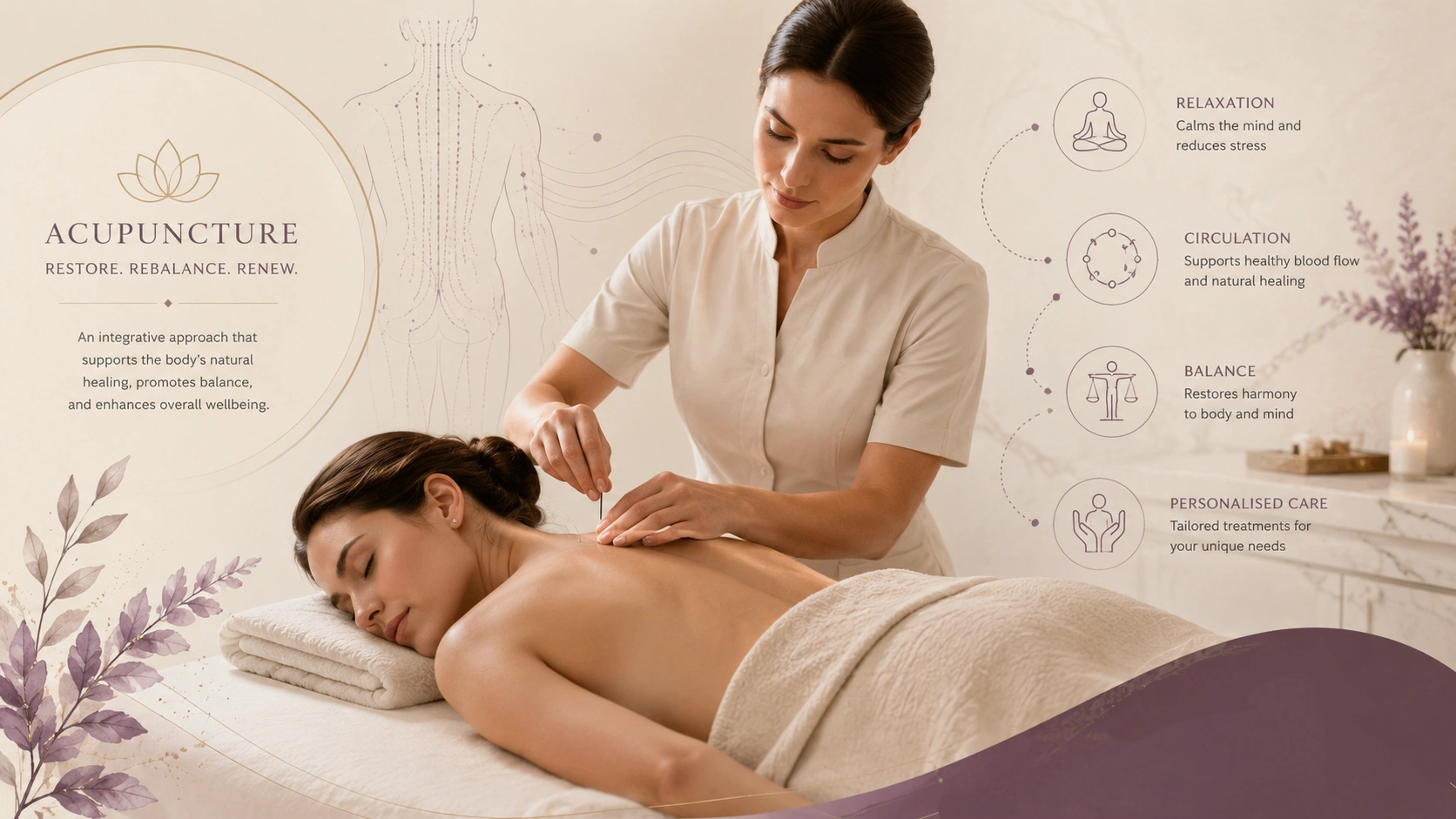
Acupuncture uses fine, sterile needles to stimulate selected points on the body. Treatment may help the body settle, support relaxation, ease physical tension and encourage a calmer state before sleep.
Relaxation Support
Acupuncture may help calm the body and support a more relaxed state after treatment.
Tension Relief
Treatment may support neck, shoulder, jaw or back tension that interferes with rest.
Nervous System Balance
Care may support the transition from a heightened stress state into a more settled rhythm.
Different Sleep Patterns Need Different Care
Sleep support is not the same for every person. One person may struggle to fall asleep, another may wake at 3am, while another may sleep for hours but still feel tired. Your treatment plan is tailored to your pattern.
Difficulty Falling Asleep
Often linked with a busy mind, stress, overthinking or difficulty settling at night.
Waking During the Night
May be associated with stress, heat, digestion, hormonal changes or other internal patterns.
Waking Unrefreshed
May be related to sleep quality, fatigue, digestion, stress or constitutional weakness patterns.
Can Acupuncture Be Combined with Herbal Medicine?
Yes. In some cases, Chinese herbal medicine may be recommended alongside acupuncture when appropriate. Herbal formulas may be tailored to sleep, stress, fatigue, digestion or emotional wellbeing patterns.
- Acupuncture may support relaxation and nervous system balance
- Chinese herbs may support sleep-related body patterns when suitable
- Lifestyle guidance may focus on sleep rhythm, stress and recovery
- Treatment can be adjusted according to your response
- Medication, supplements and health history are reviewed for safety
Lifestyle Support for Better Sleep
Sleep is often influenced by daily rhythm, screen use, stress, caffeine, late meals, work habits and emotional pressure. Acupuncture care may include simple lifestyle guidance to support the treatment plan.
Evening Routine
A calming evening routine may help the body transition into rest more easily.
Stress Reduction
Gentle breathing, stretching or quiet time may support relaxation before sleep.
Digestive Comfort
Late meals, heavy foods or digestive discomfort may affect sleep in some people.
What to Expect During Treatment
Sleep History
We discuss your sleep pattern, stress, mood, digestion, energy and health history.
TCM Assessment
Your practitioner assesses your Traditional Chinese Medicine body pattern and constitution.
Gentle Acupuncture
Fine sterile needles are gently inserted at selected points while you rest comfortably.
Aftercare Support
You may receive personalised advice for sleep rhythm, rest, hydration or lifestyle support.
Acupuncture for Sleep Support in Sydney
Imperial Clinic provides personalised acupuncture and Traditional Chinese Medicine care for sleep, stress and wellbeing support in Sydney. Treatment plans are tailored according to your symptoms, constitution, health history and sleep goals.
When Should You Seek Professional Advice?
Sleep concerns can have many causes. It is important to seek professional advice if sleep problems are persistent, worsening, affecting daily function or associated with other concerning symptoms.
- Sleep problems persist for several weeks or longer
- You feel exhausted, anxious or unable to function during the day
- You experience breathing difficulties or choking during sleep
- You have severe mood changes or emotional distress
- You are taking medication or managing a chronic condition
- You are unsure whether acupuncture is suitable for you
Frequently Asked Questions
Can acupuncture help sleep?
Acupuncture may support sleep by encouraging relaxation, reducing tension and supporting body balance.
Can acupuncture help waking at night?
Acupuncture may be used as part of personalised care for night waking patterns depending on the underlying presentation.
How many sessions will I need?
This depends on your sleep pattern, stress levels, health history and individual response to treatment.
Will I feel sleepy after acupuncture?
Some people feel relaxed or sleepy after treatment, while others feel calmer and more settled.
Can herbs be combined with acupuncture?
Yes. Chinese herbal medicine may be considered when suitable and should be prescribed by a qualified practitioner.
Should I stop sleep medication?
No. Do not stop prescribed medication unless advised by your medical doctor.
Related Health Articles
Looking for Sleep Support?
Book a consultation with our experienced practitioners and discover whether acupuncture and Traditional Chinese Medicine care may be suitable for your sleep concerns.
View Acupuncture Services