

Medical and Health • Imperial Clinic
Reviewed by Imperial Clinic Practitioners • Registered Chinese Medicine Practitioners in Sydney
Tongue and pulse diagnosis are traditional assessment methods used in Chinese Medicine. During a consultation, your practitioner may look at the appearance of your tongue and feel the quality of your pulse to help understand your overall body pattern.
These assessments are not used alone. At Imperial Clinic, tongue and pulse diagnosis are considered together with your symptoms, health history, lifestyle, sleep, digestion, stress levels and treatment goals to guide a personalised Traditional Chinese Medicine care plan.
Tongue & Pulse Diagnosis
What Is Tongue and Pulse Diagnosis?
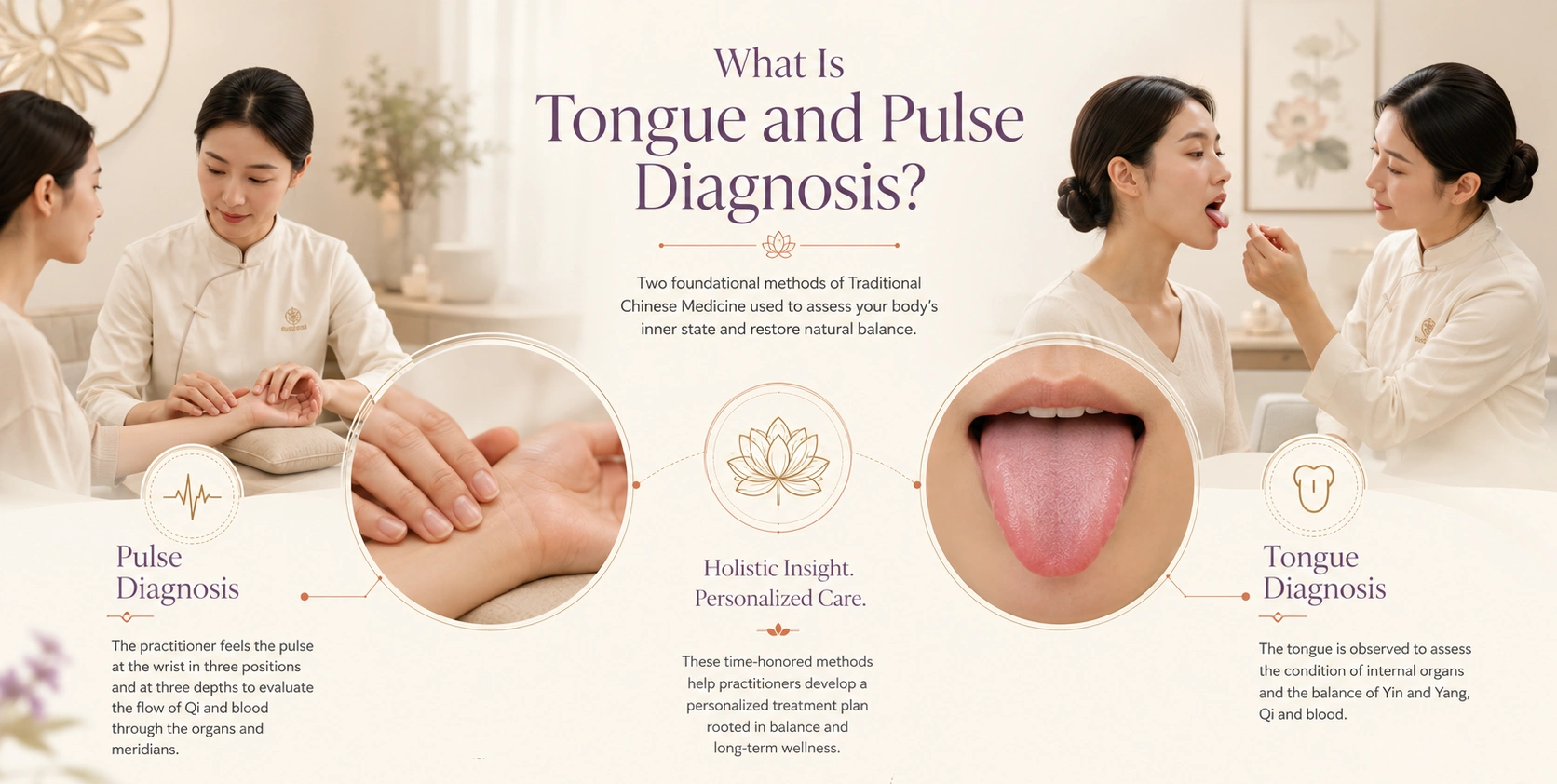
Tongue and pulse diagnosis are part of the Traditional Chinese Medicine assessment process. The tongue may reflect patterns related to digestion, fluids, circulation and internal balance, while the pulse may provide information about the body’s energy, rhythm and overall condition.
- Used as part of a wider TCM consultation
- May help identify patterns of imbalance
- Considers tongue colour, shape, coating and moisture
- Considers pulse rhythm, depth, strength and quality
- Supports personalised treatment decisions
- May help track changes over time
Why Do Practitioners Check the Tongue and Pulse?
In Chinese Medicine, symptoms are understood as part of a broader body pattern. Tongue and pulse assessment can help your practitioner understand how different systems may be working together and where support may be needed.
Assessment May Help Guide
- Acupuncture point selection
- Chinese herbal formula strategy
- Moxibustion or cupping suitability
- Lifestyle and dietary advice
- Understanding of TCM body patterns
- Follow-up treatment adjustments
What Does the Tongue Show in Chinese Medicine?
During tongue assessment, your practitioner may observe the tongue’s colour, shape, coating, moisture and movement. These details are interpreted according to Traditional Chinese Medicine principles and are considered together with your symptoms and health history.
Tongue Colour
Colour may be considered when assessing circulation, heat, cold or vitality patterns in Traditional Chinese Medicine.
Tongue Coating
The coating may provide information about digestion, fluids, dampness, heat or other TCM body patterns.
Shape and Moisture
Shape, cracks, swelling, dryness or moisture may be considered as part of the overall assessment.
What Does the Pulse Show in Chinese Medicine?
Pulse diagnosis in Chinese Medicine involves feeling the pulse at different positions on the wrist. Your practitioner may assess depth, strength, rhythm, speed and quality to help understand your body pattern.
Pulse Strength
Strength may be considered when assessing energy, vitality and overall body condition from a TCM perspective.
Pulse Rhythm
Rhythm and speed may provide additional information when considered alongside symptoms and health history.
Pulse Quality
Quality may be described in many ways in TCM and helps guide the practitioner’s treatment strategy.
Why Diagnosis Is More Than One Sign
Tongue and pulse diagnosis are valuable tools, but they are not used in isolation. A complete Traditional Chinese Medicine assessment considers the whole person, including symptoms, history, lifestyle and current health goals.
- Your main symptoms and how long they have been present
- Sleep, digestion, stress and energy levels
- Pain, mood, temperature and body sensations
- Menstrual cycle or women’s health history when relevant
- Medication, supplements and medical history
- Traditional Chinese Medicine tongue and pulse findings
How Tongue and Pulse Diagnosis Guides Treatment
The information gathered during assessment helps your practitioner choose a treatment approach that is suitable for your body pattern. This may include acupuncture, Chinese herbal medicine, moxibustion, cupping or lifestyle guidance when appropriate.
Acupuncture
Point selection may be guided by your symptoms, body pattern and treatment goals.
Herbal Medicine
Herbal formulas may be personalised according to your TCM diagnosis and overall condition.
Lifestyle Guidance
Your practitioner may suggest simple changes related to rest, food, warmth, stress or daily habits.
What to Expect During Assessment
Health Discussion
We discuss your symptoms, health history, lifestyle, medications and treatment goals.
Tongue Assessment
Your practitioner may observe tongue colour, coating, shape and moisture.
Pulse Assessment
Your practitioner may gently feel the pulse at different positions on the wrist.
Care Planning
A personalised treatment approach is recommended based on the full assessment.
Before Your Appointment
To make tongue and pulse assessment clearer, a few simple preparations may be helpful before your visit.
- Avoid strongly coloured drinks shortly before your appointment
- Avoid brushing or scraping your tongue immediately before consultation
- Bring a list of medications and supplements
- Bring relevant medical reports if available
- Tell your practitioner about recent illness, food, medication or changes
- Arrive without rushing where possible
Tongue and Pulse Diagnosis in Sydney
Imperial Clinic provides personalised Traditional Chinese Medicine consultations in Sydney, including tongue and pulse assessment when appropriate. Our practitioners consider your symptoms, health history and body pattern to recommend suitable acupuncture, herbal medicine or other TCM care.
When Should You Seek Professional Advice?
Tongue and pulse diagnosis can help guide Traditional Chinese Medicine care, but persistent or concerning symptoms should also be assessed by a suitable healthcare professional.
- Your symptoms are persistent, worsening or unexplained
- You have significant pain, fatigue or digestive changes
- You are taking medication or managing a diagnosed condition
- You are pregnant, breastfeeding or planning pregnancy
- You notice sudden or concerning changes in health
- You are unsure whether Chinese Medicine care is suitable for you
Frequently Asked Questions
What is tongue diagnosis?
Tongue diagnosis is a Traditional Chinese Medicine assessment that observes tongue colour, coating, shape and moisture.
What is pulse diagnosis?
Pulse diagnosis involves gently feeling the pulse at the wrist to assess qualities such as rhythm, depth and strength.
Is tongue and pulse diagnosis painful?
No. Tongue observation is visual, and pulse assessment involves gentle touch at the wrist.
Why does my practitioner check my tongue?
The tongue may provide information about Traditional Chinese Medicine patterns related to digestion, fluids and balance.
Should I brush my tongue before consultation?
It is best not to brush or scrape your tongue immediately before a TCM consultation, as it may change the coating.
Can diagnosis change over time?
Yes. Tongue and pulse findings may change as symptoms, lifestyle, treatment response and body condition change.
Related Health Articles
Interested in a Personalised TCM Consultation?
Book a consultation with our experienced practitioners and discover how Traditional Chinese Medicine assessment may guide your care.
View Diagnosis & Consultation