

Medical and Health • Imperial Clinic
Reviewed by Imperial Clinic Practitioners • Registered Chinese Medicine Practitioners in Sydney
Menstrual pain is a common concern that can affect daily life, work, sleep and emotional wellbeing. It may feel like cramping, lower abdominal pain, lower back discomfort, pelvic heaviness or pain that appears before or during menstruation.
Understanding menstrual pain can help you recognise possible patterns, triggers and when to seek professional advice. At Imperial Clinic, menstrual pain is viewed through both a Traditional Chinese Medicine perspective and a whole-person approach to women’s health.
Menstrual Pain Support
Understanding Menstrual Pain
Menstrual pain, also known as dysmenorrhoea, can vary from mild discomfort to pain that interferes with normal activities. Some people experience cramping only on the first day of their period, while others may have pain before menstruation begins or throughout several days of the cycle.
- May feel like cramping, aching or pulling pain
- Can affect the lower abdomen, pelvis or lower back
- May appear before or during menstruation
- Can be associated with fatigue, mood changes or digestive discomfort
- May vary from cycle to cycle
- Often benefits from personalised assessment
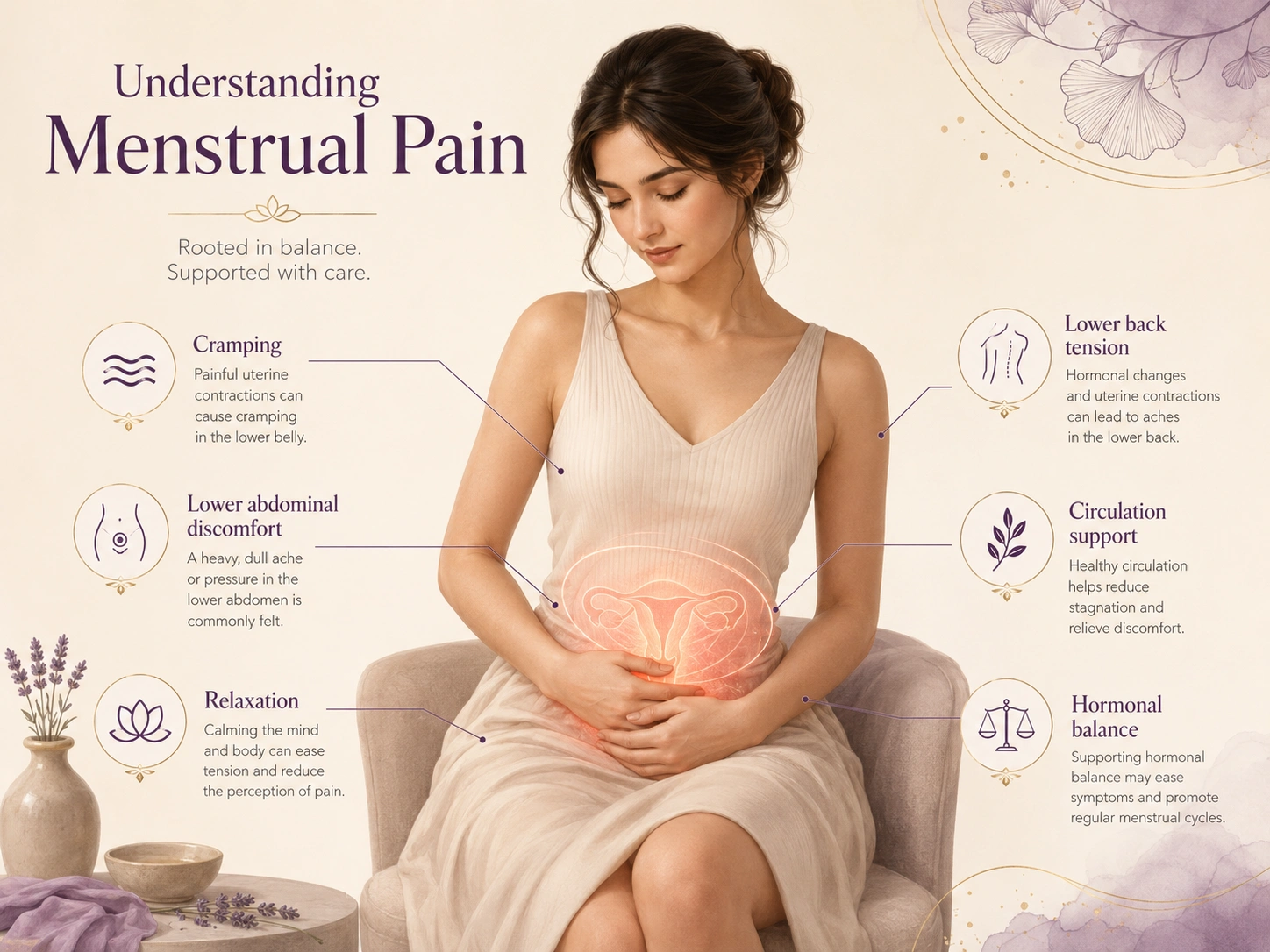
Common Symptoms of Menstrual Pain
Menstrual pain may involve more than cramping alone. Some people experience a combination of physical, digestive and emotional symptoms around their period.
Possible Symptoms
- Lower abdominal cramps
- Lower back or hip discomfort
- Pelvic heaviness or pressure
- Bloating or digestive changes
- Fatigue or low energy
- Mood changes or irritability
Types of Menstrual Pain
Menstrual pain can have different patterns and possible causes. Understanding the type of pain can help guide a more suitable approach to care.
Primary Menstrual Pain
Common period cramps that are not linked to a diagnosed pelvic condition. Pain often begins around the start of menstruation.
Secondary Menstrual Pain
Pain may be associated with underlying conditions such as endometriosis, fibroids or pelvic inflammation and should be medically assessed.
Cycle-Related Discomfort
Some discomfort may appear alongside PMS, bloating, breast tenderness, mood changes or fatigue before menstruation.
What Can Contribute to Menstrual Pain?
Menstrual pain may be influenced by hormones, pelvic circulation, inflammation, stress, lifestyle habits and underlying health conditions. The pattern can differ from person to person.
Cycle Changes
Hormonal changes during the menstrual cycle may influence cramping, flow, mood and energy levels.
Stress & Lifestyle
Stress, poor sleep, overwork, diet and reduced movement may affect cycle-related symptoms in some people.
Underlying Conditions
Severe or worsening pain may be associated with conditions such as endometriosis, fibroids or pelvic disorders.
Menstrual Pain from a TCM Perspective
In Traditional Chinese Medicine, menstrual pain may be related to disrupted Qi and Blood flow, cold patterns, stagnation, weakness or imbalance affecting the cycle. Treatment aims to support smoother flow, reduce tension and encourage overall balance.
- Acupuncture may help support pelvic circulation and relaxation
- Chinese herbal medicine may be considered for cycle-related patterns
- Moxibustion may be used for cold-type discomfort when suitable
- Cupping or gentle bodywork may assist tension patterns when appropriate
- Lifestyle advice may include warmth, rest, diet and stress support
How Acupuncture May Support Menstrual Pain
Acupuncture may be used as part of a personalised approach to menstrual pain support. Point selection is based on the individual’s pain pattern, cycle history, constitution and Traditional Chinese Medicine diagnosis.
Pain Support
Acupuncture may help support comfort by encouraging circulation and relaxation around pain patterns.
Cycle Balance
Treatment may be tailored to cycle timing, flow pattern, PMS symptoms and overall body constitution.
Whole-Body Care
Care may also consider stress, digestion, sleep, energy and emotional wellbeing around the cycle.
What to Expect During Consultation
Cycle History
We discuss your cycle pattern, pain timing, flow, PMS symptoms and health history.
TCM Assessment
Your practitioner assesses your Traditional Chinese Medicine body pattern and constitution.
Treatment Plan
A personalised plan may include acupuncture, herbs, moxibustion or lifestyle guidance when appropriate.
Ongoing Support
Your care may be reviewed across cycles and adjusted according to your response and goals.
Menstrual Pain Support in Sydney
Imperial Clinic provides personalised Traditional Chinese Medicine care for menstrual pain, period cramps, PMS-related discomfort and women’s health concerns across Sydney. Our practitioners assess each individual case and recommend suitable care based on your symptoms, constitution and wellbeing goals.
When Should You Seek Professional Advice?
Menstrual pain is common, but severe, worsening or unusual pain should not be ignored. It is important to seek professional advice if symptoms are affecting your daily life or changing over time.
- Pain is severe or worsening over time
- Pain affects work, sleep, study or daily activities
- Bleeding is very heavy, irregular or unusual
- Pain occurs outside your period
- You experience fever, fainting or unusual discharge
- You suspect endometriosis, fibroids or another pelvic condition
Frequently Asked Questions
What causes menstrual pain?
Menstrual pain may be related to normal cycle changes, pelvic circulation, inflammation, stress or underlying conditions.
Is menstrual pain normal?
Mild cramps are common, but severe or worsening pain should be assessed by a healthcare professional.
Can acupuncture help period pain?
Acupuncture may support period pain relief by encouraging circulation, relaxation and Traditional Chinese Medicine balance.
Can Chinese herbs support menstrual pain?
Chinese herbal medicine may be considered when suitable and should be prescribed by a qualified practitioner.
When should I seek medical advice?
Seek advice if pain is severe, worsening, irregular, associated with heavy bleeding or affecting daily function.
How many sessions will I need?
This depends on your cycle pattern, pain severity, health history and individual response to treatment.
Related Health Articles
Looking for Menstrual Pain Support?
Book a consultation with our experienced practitioners and discover whether Traditional Chinese Medicine care may be suitable for your condition.
View Women’s Health Services